
In the heart of the Bayou State, rodeo isn’t just a sport; it’s a survival skill passed down through generations. While Texas often grabs the headlines, Louisiana’s rodeo scene is a raw, authentic blend of Cajun livestock traditions and high-octane grit. From the swampy lowlands to the dust of the arena, the spirit of the “Kajun Kidd” lives in every ride.
The Birth of the Bayou Bronc: How Louisiana Rodeo Began
Before the bright lights of the NFR and the roaring crowds in Bossier City, Louisiana, rodeo was born in the mud, sweat, and spirit of the 18th-century frontier. It wasn’t a sport back then; it was a way of survival.
1700s–1800s: The French and Spanish Cattle Trails
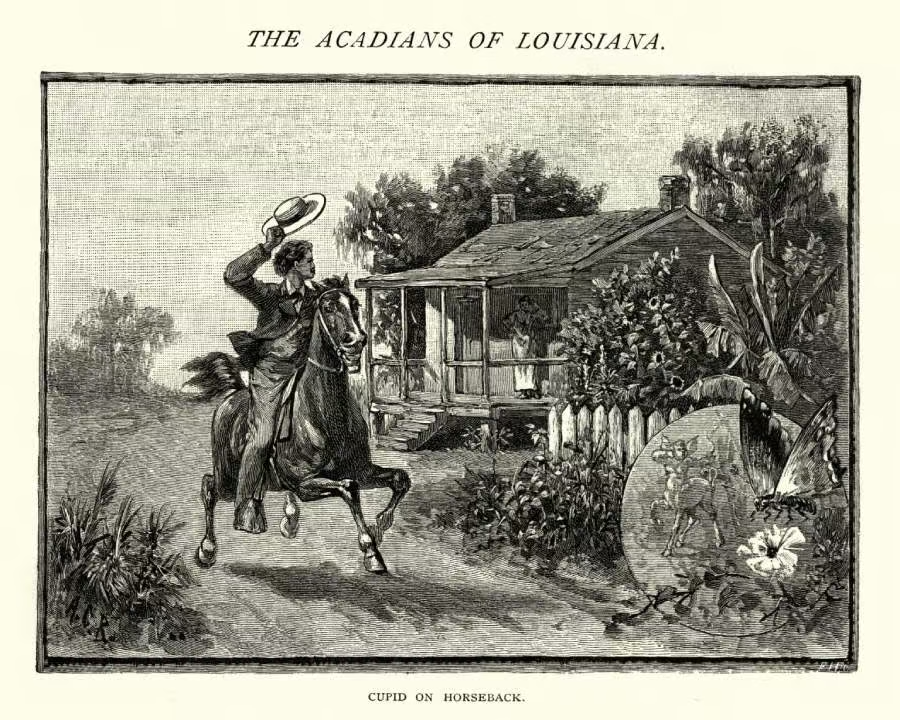
Louisiana’s rodeo roots are unique because they blend French and Spanish traditions in a way no other state can claim. Long before fences crisscrossed the South, southwest Louisiana was a vast, open-range cattle country. Towns like Opelousas, Church Point, and Lake Charles became the epicenters of a burgeoning livestock industry. When the Acadians (Cajuns) settled in the prairies, they adapted the Spanish vaquero skills to the marshy terrain. Handling cattle in the Louisiana heat required a specific kind of toughness. Competitive rodeo grew out of daily chores. A “roping match” wasn’t for a trophy; it was a way for ranch hands to prove who could catch a stray bull the fastest in the thick brush or who could stay on a wild colt during spring branding.
1900s: From the Pasture to the Parish Fair
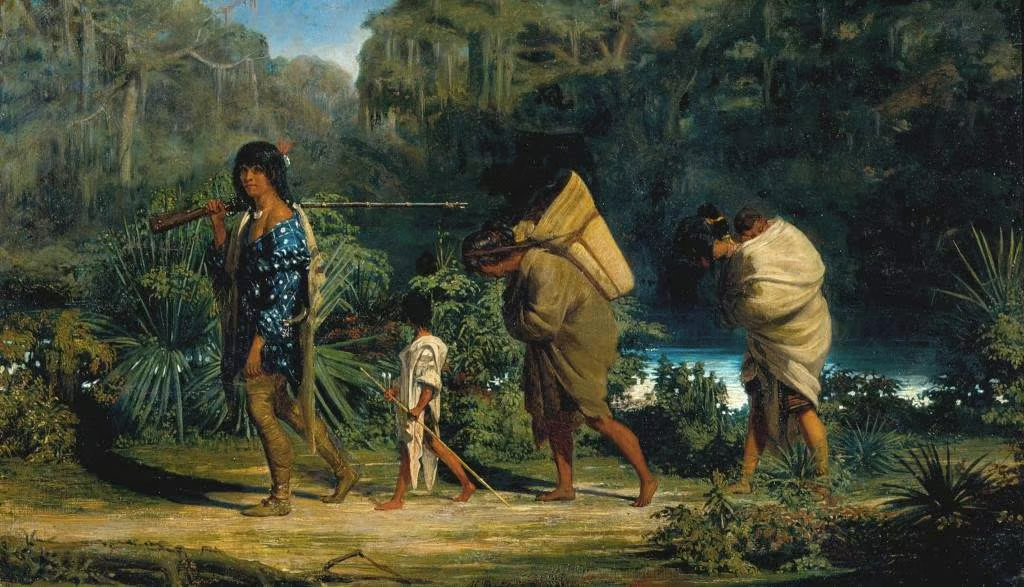
By the turn of the 20th century, these informal “pasture ropings” began to migrate into the heart of the community. Unlike the dry, dusty rodeos of the West, Louisiana’s early events were celebrations of life. They were folded into Parish Fairs and Agricultural Festivals, where the smell of wood-fired gumbo mixed with the scent of livestock.
- The Church Point Milestone: In 1944, the Cajun Rodeo in Church Point was officially established. It served as a bridge between the old-world ranching traditions and the professional sport we see today. It remains one of the most respected, grit-filled rodeos in the nation.
- Deep South PRCA Rodeo (Winnsboro): A cornerstone since 1958, featuring the state’s highest payout at over $60,000.
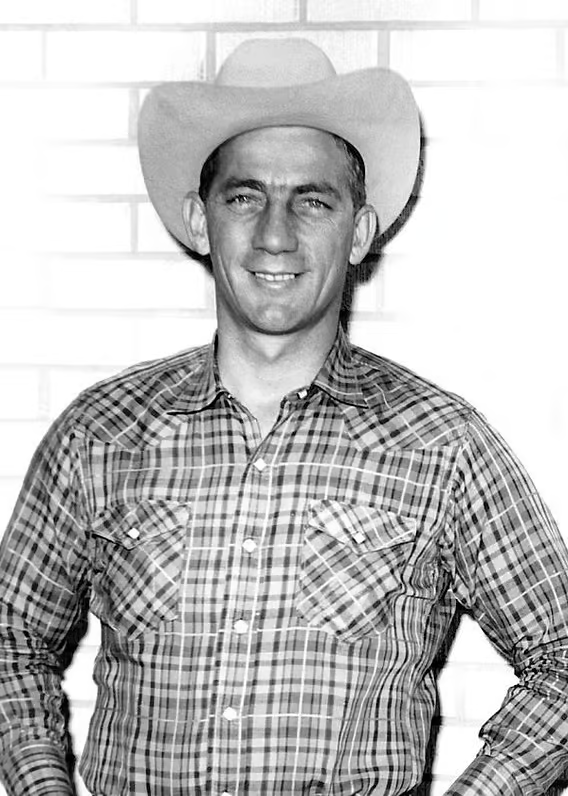
- The “Kajun Kidd” Legacy: As the sport formalized, Louisiana riders began traveling. Athletes like Dudley Gaudin took the “Cajun Style,” a mix of flashy showmanship and relentless toughness, to the national stage, proving that a boy from the Bayou could out-ride anyone from Texas or Wyoming.
The Legends Who Put the Bayou on the Map
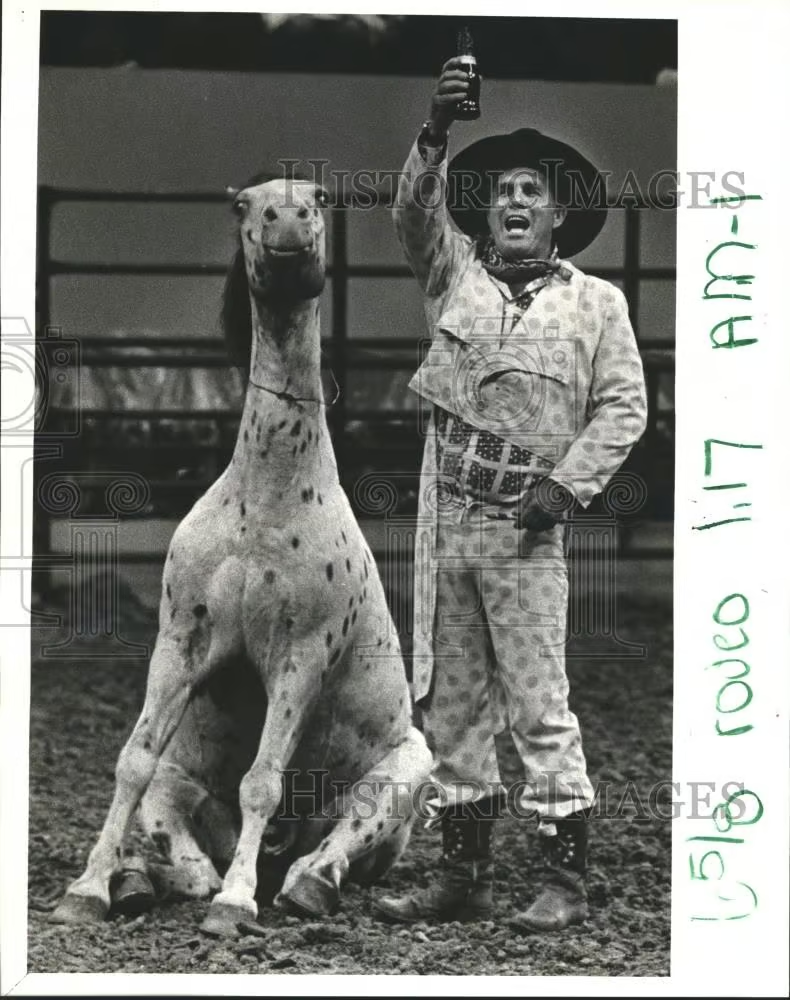
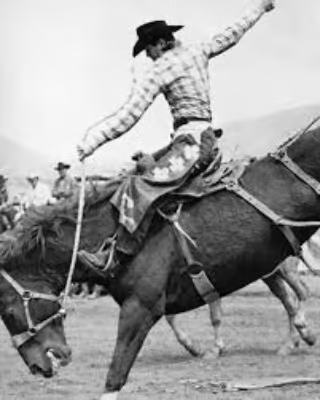
Louisiana is a powerhouse for Steer Wrestling. The state’s “bulldoggers” are legendary for their strength and timing, a skill set honed by wrestling cattle in thick mud. Louisiana has quietly raised some of the toughest competitors to ever tip a hat. These aren’t just athletes; they are icons of the dirt:
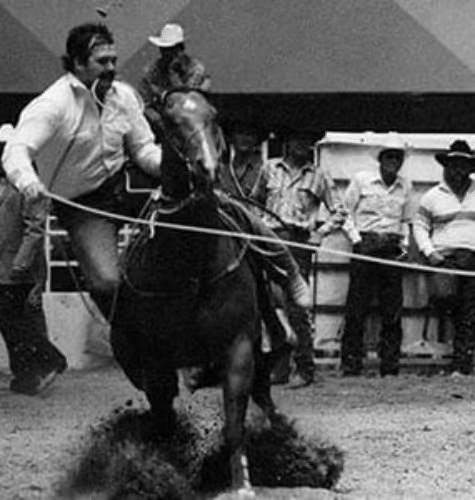
- T.B. Porter:(Leesville): The man who started it all. Louisiana’s first professional cowboy and the 1949 World Champion Calf Roper. From winning goat roping at age 3 to riding his horse down Broadway after conquering Madison Square Garden, Porter was the first to show the world that Louisiana cowboys were “tough as nails and leather.” Louisiana’s Original Cowboy; first to hold a professional card and represent the Pelican State at the inaugural National Finals Rodeo (NFR) in 1959.
- Felix Cooper (Gilbert): A 2001 National Rodeo Hall of Fame Inductee, Felix was the architect of the Cooper roping dynasty. Born and raised in the Louisiana dirt, he set the standard for the “Super Looper” style that would later make his family a household name in the PRCA. He didn’t just win; he taught the world that Louisiana ropers were built different.
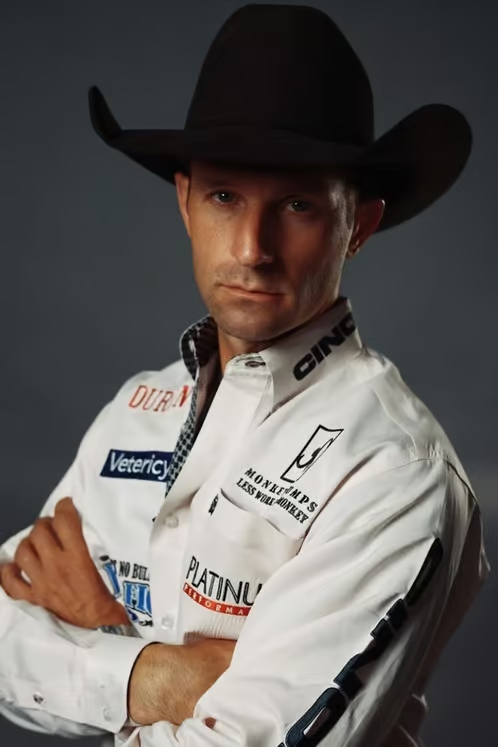
- Steve Duhon (Opelousas): A true titan of the sport. A former LSU linebacker who traded the gridiron for the arena, Duhon is a 3-time World Champion Steer Wrestler. He still holds the legendary NFR arena record of 3.0 seconds, a feat of pure Louisiana speed and strength that has stood for nearly 40 years.
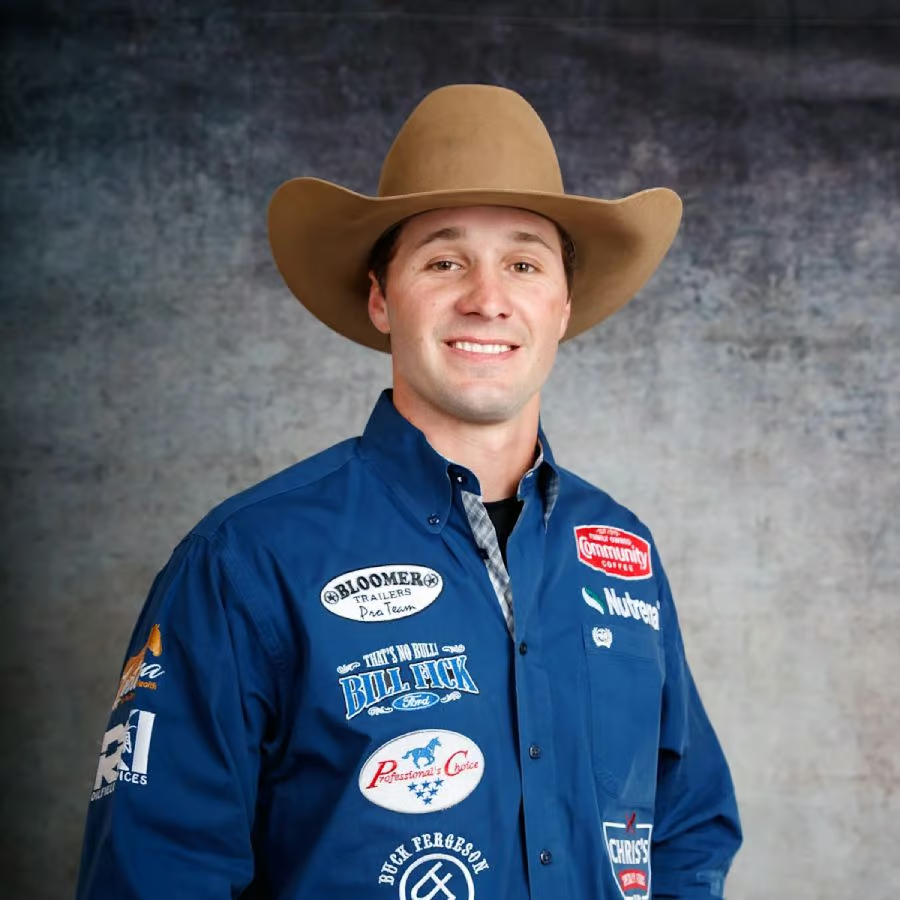
- Jade Corkill (Church Point): An absolute titan of the arena. With 8 PRCA World Championships as a Team Roping Heeler, Corkill is widely considered one of the most dominant forces in the history of the sport.
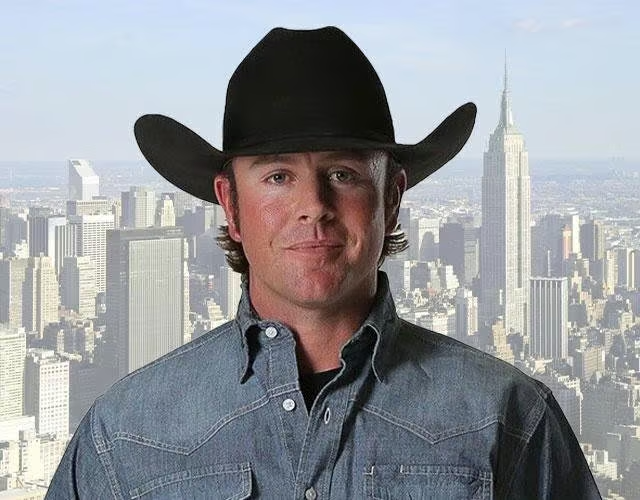
- Rowdy Parrott (Mamou): A 5-time NFR Qualifier in Steer Wrestling. From winning PRCA Rookie of the Year in 2014 to dominating the 2025 season, Parrott is the gold standard for Louisiana “bulldoggers.”
- Scott Breding (Lake Charles): A two-time PRCA World Champion Bull Rider who proved that Louisiana boys have the nerves of steel required to dance with 2,000-pound beasts.
- Tuf Cooper (Jasper/Decatur): Though born in Texas, Tuf was raised in the Louisiana dirt. As a multiple-time World Champion Tie-Down Roper and son of the legendary Roy Cooper, he carries a legacy that is as deep as the Atchafalaya.
- Shane Hancey (Sulphur): A renowned professional tie-down roper often referred to as a “Louisiana cowboy or Sulphur native” who brings his roots to this current rodeo career. A 2013 World Champion and 15-time Wrangler National Finals Rodeo qualifier.
- The Hall of Famers: Pioneers like Dudley J. Gaudin (the original “Kajun Kidd”), Steve Duhon, T.B Porter, Rick Young, Clyde Vamvoras, and Felix Cooper are immortalized in the National Rodeo Hall of Fame, ensuring the Louisiana flag flies high in rodeo history.
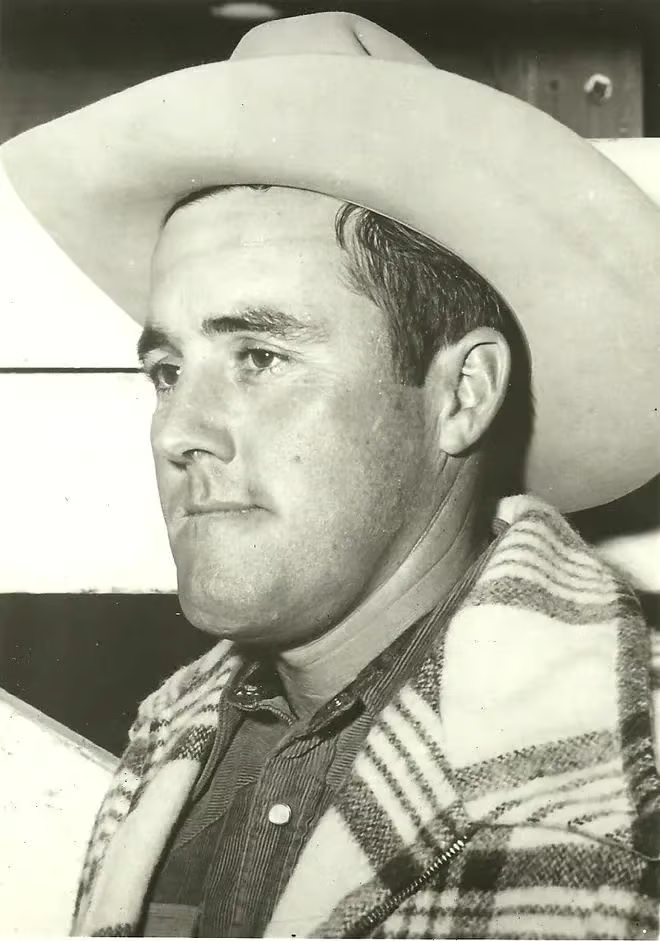
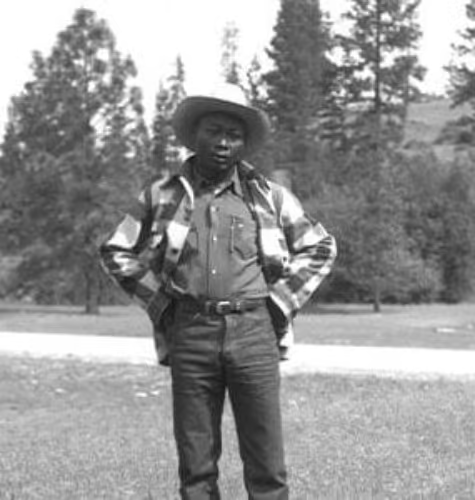




The New Blood: 2025–2026 Rising Stars
The legacy is being written right now in the 2025–2026 circuit by a new generation of Bayou warriors. The 2025–2026 season is seeing a massive surge of talent from the Bayou State. These athletes aren’t just competing; they are currently sitting at the top of the world standings:
The Roughstock Specialists
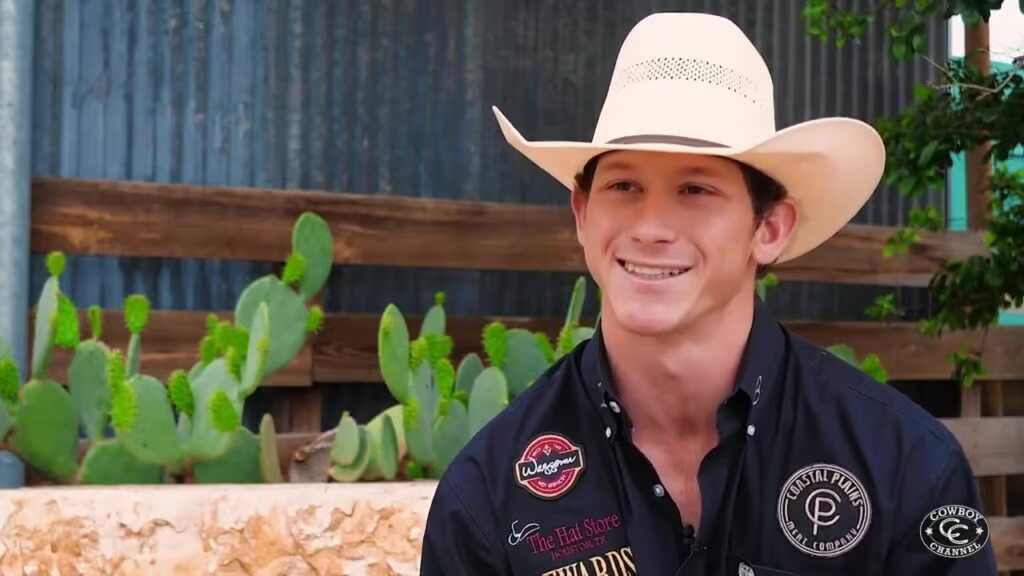
- Kade Sonnier (Carencro – Bareback Riding): A superstar on the rise. After a dominant 2025 season where he finished No. 4 in the world, Kade is a consistent round-winner and a favorite for a gold buckle in 2026.
- Waylon Bourgeois (Church Point – Bareback Riding): The “Lafayette Lightning,” Waylon is a NFR standout currently ranked among the elite in the world. He is known for an aggressive, high-scoring style that brings crowds to their feet. A Church Point native who stormed the 2025 NFR, winning rounds and proving he belongs among the elite.
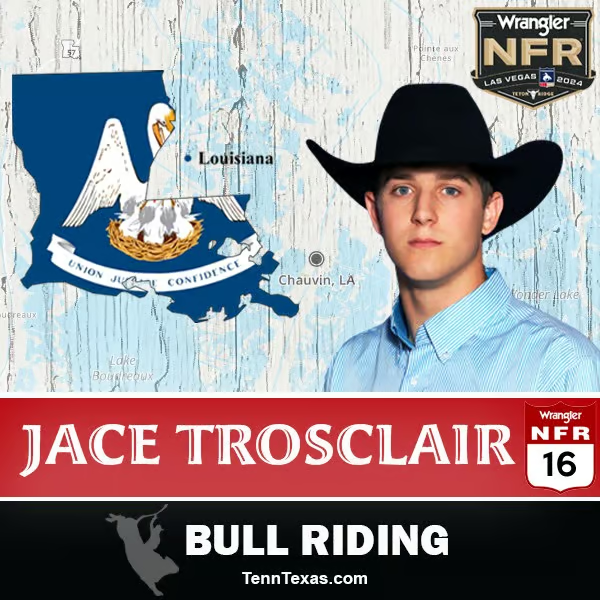
- Jace Trosclair (Chauvin – Bull Riding): Representing the deep marshlands of south Louisiana, Trosclair is currently a top contender on the PRCA Xtreme Bulls tour, proving that the toughest bull riders often come from the bayou.
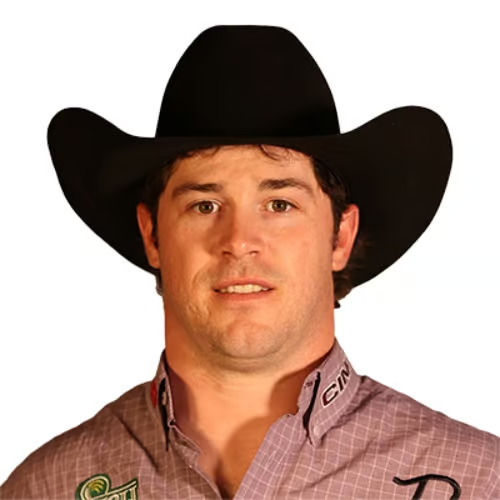
- Dustin Boquet (Bourg – Bull Riding): A veteran with a “never-quit” attitude, Boquet remains a staple in the professional standings, consistently qualifying for the biggest rodeos on the 2026 circuit.
The Speed Demons
- Josey Murphy (Keachi – Barrel Racing): A breakout star, hailing from Keachi in the 2026 season. Josey is currently ranked No. 20 in the WPRA World Standings with over $13,500 in early-season earnings, making her the one to watch as the circuit heads toward the summer run.
- Tiffani Sonnier (Carencro – Barrel Racing): Keeping the winning tradition in the Sonnier family, Tiffani is a consistent force in the Southeastern Circuit and a top competitor in regional 2026 standings.
The Roping Elites
- Rowdy Parrott (Mamou – Steer Wrestling): The undisputed king of the 2026 leaderboard, currently sitting at No. 3 in the world.
- Zack Jongbloed (Iowa, LA – Tie-Down Roping): A 3-time NFR qualifier, known for his incredible consistency and “all-in” mindset. Currently holding a steady position in the Top 15 of the world standings.

- Josie Connor (Iowa, LA – Breakaway Roping): A generational talent and the pride of Lafayette, Connor is a household name in the breakaway world. Josie is a perennial Top 5 world contender and the reigning champion of multiple 2026 tour stops. recently dominating the 2026 Lafayette Rodeo.
- Karrigan Graves (Kentwood – Breakaway Roping): A literal rocket ship in the standings, Karrigan is currently the No. 4-ranked Breakaway Roper in the world for 2026, proving that Louisiana’s cowgirls are a force to be reckoned with.
- Avery Landry (Arnaudville, LA – Breakaway Roping): Currently making waves as a Top 10 Rookie in the 2026 Resistol Rookie standings.
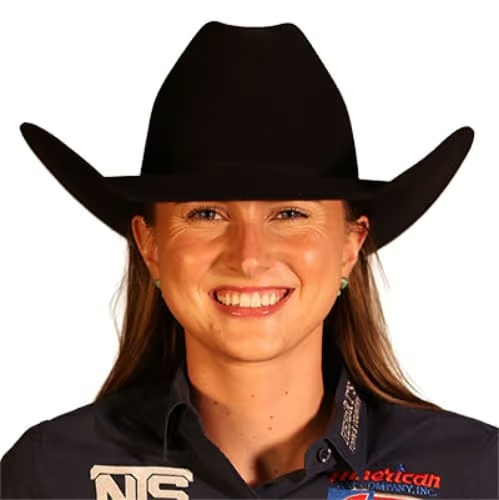

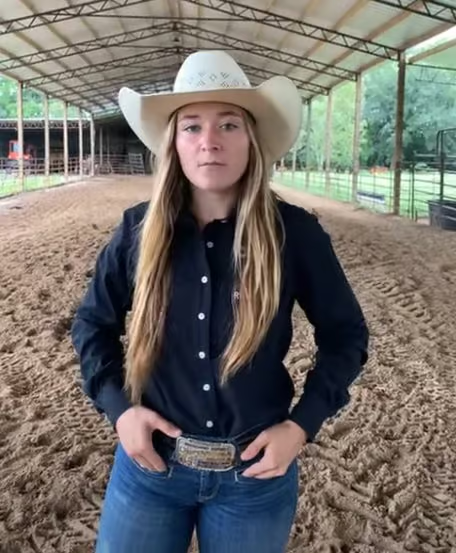
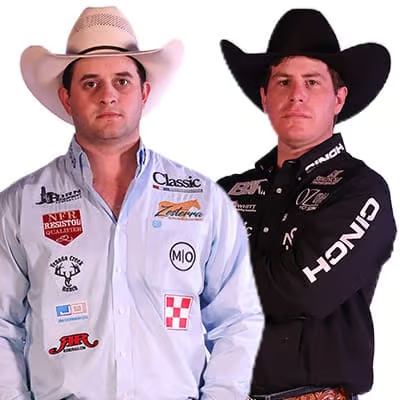
- Jade Corkill (Church Point, LA – Team Roper): One of the most dominant heelers in history, Corkill is off to a massive start in 2026. Following the “Texas Swing,” he is currently sitting at No. 2 in the World Standings (Heeling) after a strong reserve championship finish at Rodeo Austin in late March 2026 with partner Clint Summers.
- Marcus Theriot (Lumberton/Poplarville area, but strong LA ties – Team Roper): A consistent presence in the PRCA standings, Theriot has been active in the 2026 season rankings, recently placing at major events like Rodeo Austin alongside partner Chase Graves.
- Cyle Denison (Iowa, LA – Team Roper): Denison is another Louisiana-born header making waves on the 2026 professional circuit, recently placing in rounds during the high-stakes spring rodeos.
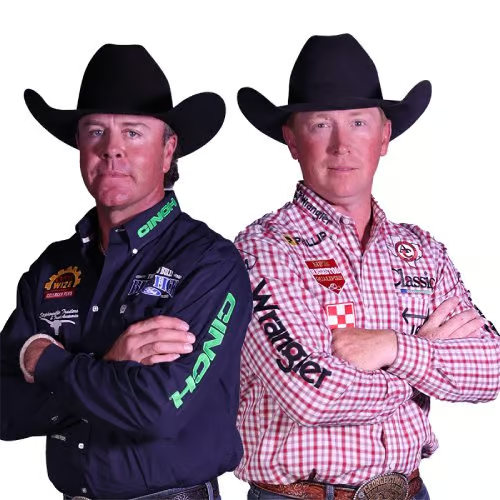
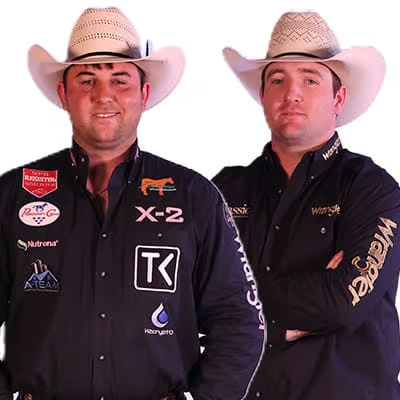
The Saltwater Cowboy & The Marsh Work
Louisiana’s dominance in professional team roping is a direct byproduct of its grueling landscape, which breeds the legendary “Saltwater Cowboy” and a caliber of grit rarely found on the dry plains of the West. As Lori O’Harver of Bronc Riding Nation observes, the state’s knee-deep coastal marshes and tidal basins demand “marsh-hardened” horses, stout, highly conditioned athletes capable of outperforming “outside” horses that often succumb to the brutal humidity, stagnant heat, and relentless mosquitoes within a week. This environmental toughness is further sharpened by Louisiana’s deep-rooted “Bulldogging” culture; by growing up around the aggressive, high-speed world of steer wrestling, these ropers develop a fearless style that translates seamlessly to the PRCA leaderboards. Ultimately, in the Bayou, the prestige of a cowboy is measured by his ability to navigate the heavy mud, ensuring that those who survive the marsh are uniquely equipped to dominate the arena.


Life Outside the Chutes: Cowboys of the Crawfish Business
For many Louisiana pros, “time off” is just a different kind of harvest. Many pros, like the Connor family, run multi-generational ranches. Their “hobbies” often include training the next generation of performance horses or managing hundreds of head of cattle. A significant number of Louisiana cowboys come directly from the Crawfish Outlet to Geaux Business. Since Louisiana is known for its hunting and fishing, between events, you’ll find athletes decompressing in a duck blind or on a bass boat in the marshes. Many legends spend their downtime coaching the stars of the Louisiana High School Rodeo Association, passing down the precise “Cajun Style” to the next generation.
When the rodeo season slows, you’ll find legends like Rowdy Parrott back in Mamou, working the family crawfish ponds. It’s a seasonal cycle: as the crawfish harvest peaks in the spring, the rodeo season begins to heat up, creating a lifestyle where “mud and money” are inextricably linked.


Building the Future: The Louisiana Legends Legacy Program
The state isn’t just resting on its history; it’s actively building the next generation through elite education. In Winnsboro, LA, former standout Cody DeMoss has established a premier training ground.
- Bulls and Broncs: During the winter, DeMoss hosts specialized roughstock schools focusing on the mechanics of bronc and bull riding. The school consistently brings in roughly 15–20 world-class instructors, including NFR qualifiers and PRCA champions, to provide one-on-one coaching. Between 5 and 10 premier stock contractors provide the animals, ensuring that students are getting on professional-grade stock that matches the intensity of the PRCA circuit. Despite being based in a small Cajun town, the school advertises nationwide and attracts international students looking to learn the “Louisiana style” of roughstock riding.
- The Louisiana Legends Legacy Program: This is not a typical weekend camp or riding clinic; it is a selective, high-level developmental program designed to transition young athletes competing in Bareback, Saddle Bronc, and Bull Riding into the professional PRCA circuit. It’s a comprehensive Media Training, preparing cowboys for NFR-level interviews and Judging Clinics, teaching riders how to understand the score from the official’s perspective. Athletes must apply to be included, ensuring the most dedicated represent Louisiana on the world stage. It’s about creating professional ambassadors for the sport, not just riders.
Origins of the “Wildest Show”
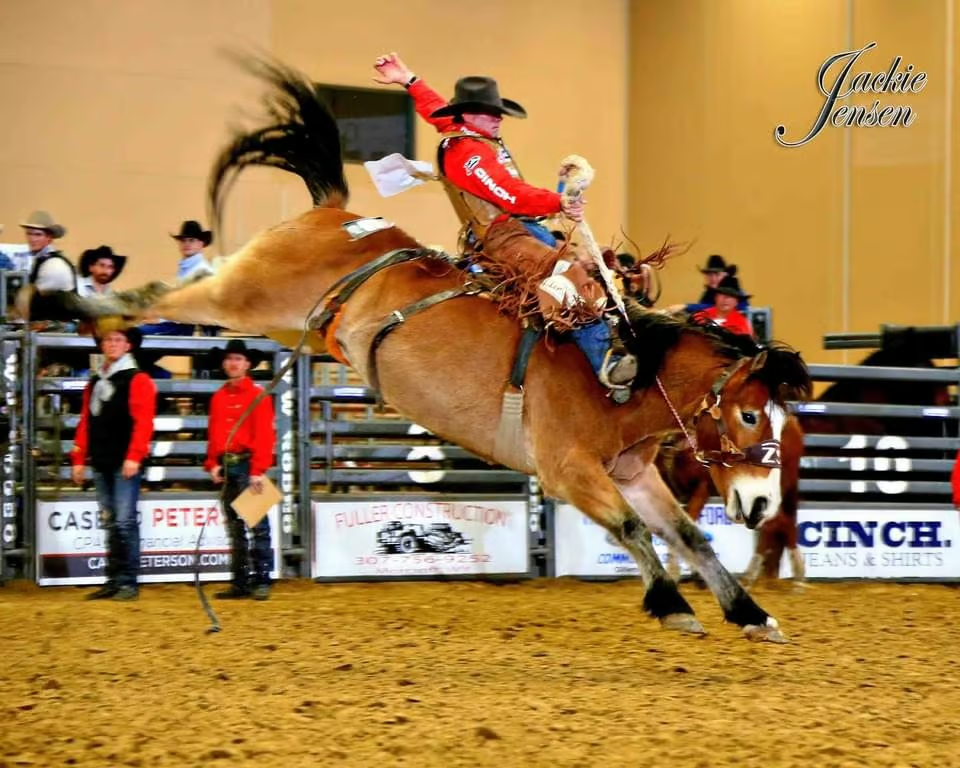
The Angola Prison Rodeo (St. Francisville), officially known as the “Wildest Show in the South,” is one of the most unique and controversial cultural fixtures in Louisiana. Held at the Louisiana State Penitentiary (the largest maximum-security prison in the U.S.), it is a high-octane spectacle where the grit of the Bayou meets the quest for redemption. The rodeo began in 1964 as a small event for inmates and employees. By 1967, it was opened to the public, and today it draws over 70,000 spectators annually during its spring and fall runs. It was originally built on the idea that the discipline and adrenaline of rodeo could provide a constructive outlet for the prison population. Unlike professional PRCA rodeos, where athletes are trained for years, Angola features inmates with varying levels of experience participating in heart-stopping, often chaotic events:
- Convict Poker: Perhaps the most famous (and harrowing) event. Four inmates sit at a poker table in the middle of the arena while a loose bull is released. The last man to remain seated wins.
- Guts and Glory: A poker chip is taped to the forehead of a massive bull. Inmates must rush the bull and attempt to snatch the chip to win a cash prize.
- Wild Cow Milking: Teams of inmates try to hold down a wild cow long enough to get a few drops of milk into a bottle.
The Purpose: Rehabilitation and Public Perception
The rodeo is a “self-supporting” event; the proceeds go toward the Inmate Welfare Fund, which pays for educational programs, recreational equipment, and religious activities that would otherwise be unfunded. Critics often point to the inherent danger of the events, while supporters argue it offers inmates a rare sense of pride, the chance to interact with the outside world, and an incentive for good behavior, as only those with clean conduct records are allowed to participate.
While the rodeo provides the thrills, the surrounding Arts & Crafts Festival provides the heart. Angola is famous for its inmate-produced goods. Spectators can purchase high-quality handmade items directly from the inmates, including: Intricate leather saddles and belts, custom-built wood furniture, fine jewelry, and paintings. For many inmates, this is their primary source of income, which they use to support their families or buy personal items from the commissary.


“For one day these inmates get extra freedom. They get to wear Wranglers, be who they are and escape from being a prisoner. They get to remember how to be cowboys and men.”
Lori Lee O’Harver
Founder of Bronc Riding Nation
While the state is packed with other jackpot rodeo events, one new event, the Hondo Rodeo Fest, is making a name for itself, and no one will want to miss it!
The Grand Finale: Hondo Rodeo Fest
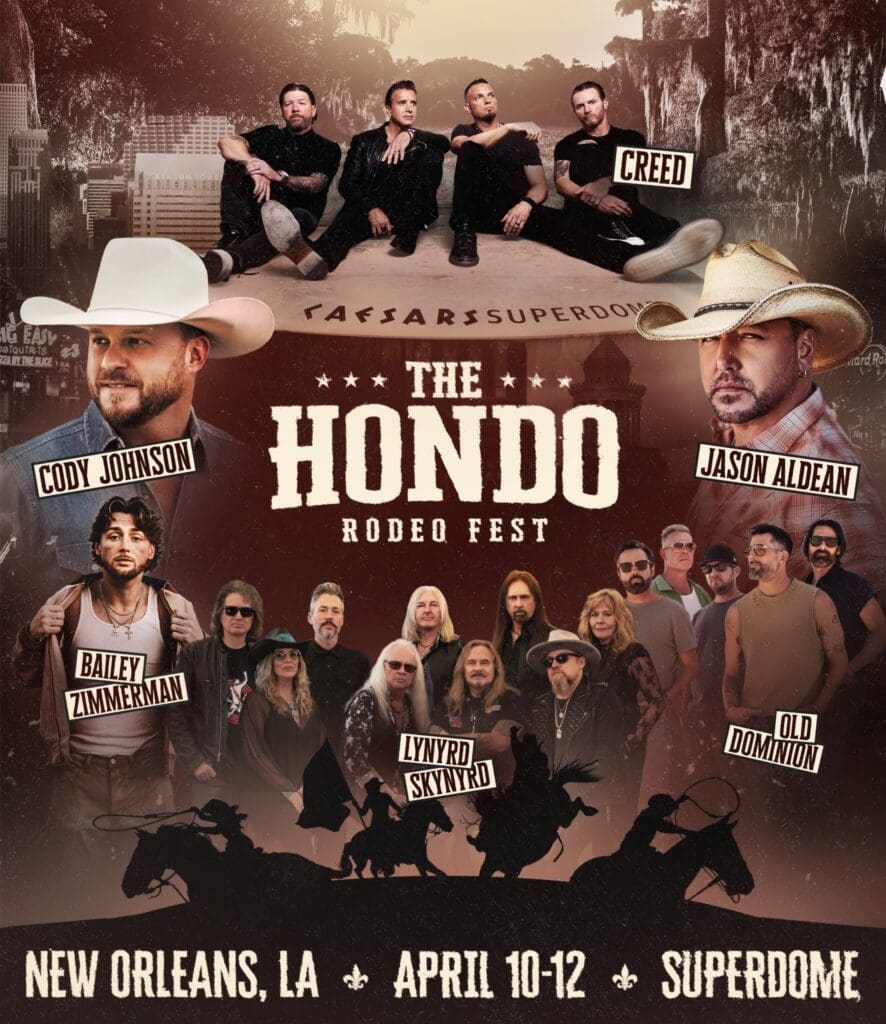
As the 2026 season reaches its peak, all eyes turn to New Orleans for the debut of the Hondo Rodeo Fest. Taking over the Caesars Superdome from April 10–12, 2026, this event represents the “new era” of Louisiana rodeo.
- The Competition: A massive $1 million prize purse, drawing the world’s best.
- The Music: A festival lineup featuring Jason Aldean, Lynyrd Skynyrd, Cody Johnson, and Creed.
- The Street Fest: A Western-themed fair with local food, live music, and mutton busting for the next generation of “Kajun Kidds.”
A Culture Like No Other
Louisiana rodeo is unique because it refuses to be “just” a show. It is a community festival where McNeese State University produces world-class athletes, and the Louisiana High School Rodeo Association ensures the next generation is ready to ride. It’s where the “Bust Out” at Angola leaves you breathless, and a Saturday night in Bossier City feels like a family reunion.
In Louisiana, the dirt is red, the gumbo is hot, and the cowboys are legendary!

About the Author:

CLN Community Sponsor